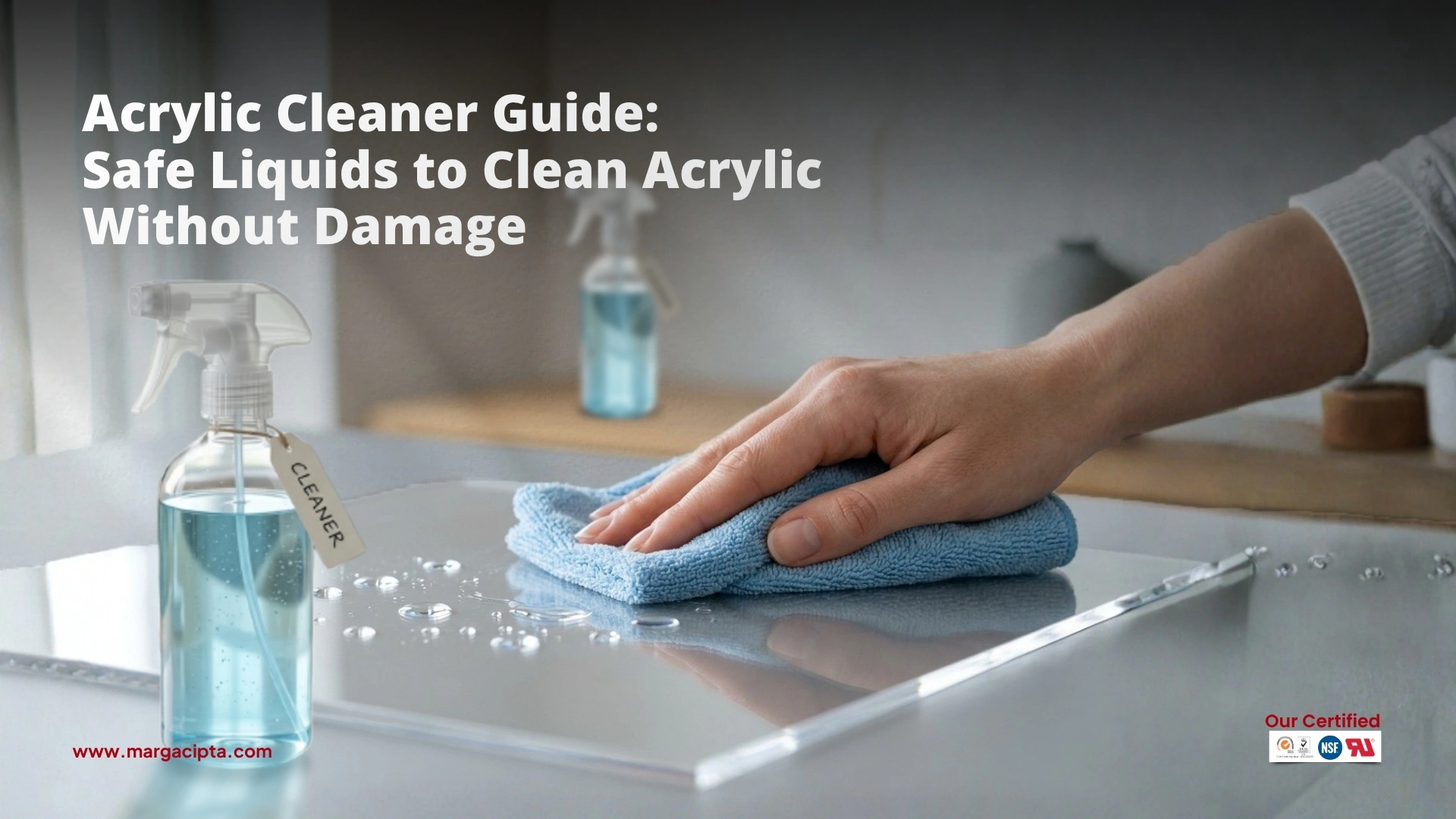
Acrylic Cleaner Guide: Safe Liquids to Clean Acrylic Without Damage

Informational

The best acrylic cleaner is a mild, non-abrasive liquid that cleans the surface without causing scratches, cloudiness, or chemical damage.

Using the wrong cleaner can permanently affect the appearance of acrylic sheets, especially clear acrylic surfaces.

To maintain clarity and durability, it is important to use safe cleaning solutions specifically suited for acrylic materials.

Why Acrylic Requires Special Cleaning

Acrylic sheets are durable and visually appealing, but their surface is more sensitive than glass. Using harsh chemicals or rough cleaning tools may cause:

  • Fine scratches
  • Cloudy appearance
  • Surface damage
  • Reduced clarity over time

Proper cleaning helps preserve the smooth finish and extends the lifespan of the material.

Read also: Why Cast Acrylic Is Better Than Glass: Benefits You Should Know

Best Liquids to Clean Acrylic

1. Mild Soap and Water

A mixture of mild liquid soap and clean water is one of the safest options for acrylic cleaning.

Benefits:

  • Gentle on the surface
  • Easy to use
  • Suitable for regular maintenance

Use a soft microfiber cloth to wipe the acrylic gently.

2. Specialized Acrylic Cleaner

Acrylic-specific cleaners are designed to remove dust, fingerprints, and dirt without damaging the material.

These cleaners help:

  • Reduce static buildup
  • Maintain clarity
  • Minimize streaks

They are recommended for displays, signage, and premium acrylic applications

3. Distilled Water

For light dust and minor cleaning, distilled water can be used safely. It helps prevent mineral spots and streaks that may occur with regular tap water.

Cleaning Tools to Use

When cleaning acrylic, always use:

  • Soft microfiber cloths
  • Non-abrasive wipes
  • Gentle wiping motions

Avoid:

  • Paper towels
  • Rough fabrics
  • Scrubbing pads

These materials can create fine scratches on the surface.

Liquids to Avoid

Certain chemicals should never be used on acrylic sheets.

Avoid:

  • Ammonia-based cleaners
  • Alcohol-based liquids
  • Glass cleaners
  • Strong solvents

These substances can cause acrylic to become cloudy, brittle, or cracked over time.

Proper Cleaning Technique

For best results:

  1. Remove loose dust first
  2. Apply cleaner gently
  3. Wipe in straight motions
  4. Dry using a clean microfiber cloth

Avoid circular scrubbing, as it may create visible swirl marks.

Read also: What Is Cast Acrylic Used For? A Closer Look

Why Acrylic Quality Also Matters

High-quality acrylic sheets generally offer:

  • Better surface consistency
  • Improved resistance to minor scratches
  • Longer-lasting clarity

Using premium acrylic materials helps maintain appearance even with frequent cleaning.

Marga Cipta supplies high-quality acrylic sheets suitable for displays, signage, fabrication, and decorative applications.

Conclusion

Choosing the right acrylic cleaner is essential to maintaining the clarity and durability of acrylic sheets.

Safe cleaning liquids such as mild soap solutions and specialized acrylic cleaners help prevent scratches and damage. Combined with proper cleaning techniques and high-quality materials, acrylic surfaces can remain clear and visually appealing for a long time.

Ready to explore our cast acrylic options? At Margacipta Wirasentosa, we offer high-quality clear cast acrylic sheets from 100% virgin MMA in various thicknesses and custom sizes to fit your needs.

Reach out to our Instagram or download our Product Catalog for more information.

News Release

Clear Acrylic Sheet vs Glass: Pros, Cons & Key Differences

Clear acrylic sheet and glass may look similar, but they have significant differences in strength, weight, safety, and flexibility.

In general, clear acrylic sheet is lighter, more impact-resistant, and easier to fabricate, while glass is more scratch-resistant and traditionally used for windows.

Because of these advantages, acrylic sheets are widely used for signage, display cases, partitions, and architectural panels.


Key Differences Between Acrylic Sheet and Glass

Feature

Clear Acrylic Sheet

Glass

Weight

About 50% lighter

Heavier

Impact resistance

Up to 10–17× stronger

Can shatter easily

Transparency

Up to 92% light transmission

Around 90%

Fabrication

Easy to cut, bend, and shape

Difficult to modify

Safety

Shatter-resistant

Breaks into sharp pieces

Scratch resistance

Lower than glass

Higher

These properties make acrylic a popular alternative for many modern applications.

Read also: Cost Breakdown: How Acrylic Can Help You Save Budget in Long-Term Projects

Pros of Clear Acrylic Sheet

Clear acrylic sheets offer several advantages compared to glass.

1. Much More Impact Resistant

Acrylic is significantly stronger against impact, making it safer for environments where breakage is a concern.

2. Lightweight

Acrylic weighs roughly half as much as glass, making installation easier and reducing structural load.

3. Easy to Fabricate

Acrylic can be:

  • Laser cut
  • CNC machined
  • Heat bent
  • Thermoformed

This flexibility makes it ideal for custom designs.

4. Excellent Optical Clarity

High-quality acrylic can achieve up to 92% light transmission, making it one of the clearest plastic materials available.

Cons of Clear Acrylic Sheet

Despite its advantages, acrylic also has limitations.

1. More Prone to Scratches

Compared to glass, acrylic surfaces can scratch more easily.

2. Higher Thermal Expansion

Acrylic expands more when exposed to temperature changes.

3. Chemical Sensitivity

Certain solvents can damage acrylic surfaces.

When to Choose Acrylic Instead of Glass

Acrylic sheets are better when you need:

  • Lightweight panels
  • High impact resistance
  • Custom shapes or fabrication
  • Safer materials for public environments

Common applications include:

  • Retail signage
  • LED light boxes
  • Display stands
  • Protective barriers
  • Architectural panels

Read also: Acrylic for Industrial Use: From Machine Guards to Safety Barriers

FAQ: Clear Acrylic Sheet vs Glass

Is acrylic stronger than glass?

Yes. Acrylic is significantly more impact resistant than glass and less likely to shatter.

Is acrylic clearer than glass?

High-quality acrylic can transmit slightly more light than glass, making it very clear.

Does acrylic scratch easily?

Yes, acrylic is more prone to scratches compared to glass.

Can acrylic replace glass?

In many applications such as signage, displays, and partitions, acrylic can effectively replace glass.

Looking for High-Quality Clear Acrylic Sheets?

If you need a material that is lighter, safer, and easier to fabricate than glass, clear acrylic sheets are a reliable alternative for many applications such as signage, displays, partitions, and architectural panels.

PT. Margacipta Wirasentosa supplies high-quality acrylic sheets with excellent optical clarity and consistent thickness, suitable for both commercial and industrial use.

  • High transparency
  • Durable and impact resistant
  • Easy to cut, shape, and fabricate
  • Suitable for signage, displays, and protective panels

Contact our team at info@margacipta.com or explore our acrylic sheet products to find the right material for your project.

Introducing Our LED VIVID & LED Ready Cast Acrylic Sheet

September 25, 2018September 26, 2018 mcwsi


PT MARGACIPTA will be launching its new line of MC® LED VIVID AND LED READY CAST ACRYLIC during the “Margarita’s with Margacipta” event at the IAPD Annual Convention in Washington.


MC® LED Ready Cast Acrylic Sheet is formulated to optimize color performance in front of today’s LED systems used in the sign industry; display market. You’ll see excellent brightness and even illumination with NO HOT SPOTS!  


MC® LED Vivid Cast Acrylic Sheet is chemically formulated with light diffusing technologies that enhance maximum brightness and light illuminating uniformity particularly suited to LED edge lighting.


See you on Tuesday at 6p at The Side Car in the Washington Hilton or Contact Us or Your Account Rep for More Details and Pricing.


Cast Acrylic, LED Acrylic, Cast Acrylic, display, LED, lights, plastic, sign

How to Identify High-Quality Cast Acrylic Sheets | Buyer’s Guide

Cast acrylic sheets are widely used across industries, from interior design and signage to industrial equipment and medical applications. However, not all acrylic sheets offer the same level of quality.

Choosing high-quality cast acrylic sheets is essential to ensure durability, clarity, and long-term performance. This guide will help you identify premium cast acrylic sheets and avoid costly mistakes in your projects.

1. Check Optical Clarity and Surface Finish

One of the most noticeable characteristics of high-quality cast acrylic sheets is their exceptional clarity.

Premium cast acrylic offers glass-like transparency with minimal distortion. When viewed from different angles, the surface should appear smooth, glossy, and free from waves, bubbles, or cloudiness.

Lower-quality acrylic often looks slightly hazy or uneven, especially under strong lighting. For applications such as display panels, signage, or interior partitions, optical clarity is a key indicator of quality.

Read also: Acrylic Sheet for Interior Design: Modern Applications for 2026 | Marga Cipta

2. Consistent Thickness Across the Sheet

Thickness consistency is a critical factor in determining acrylic quality. High-quality cast acrylic sheets are manufactured using controlled casting processes that ensure even thickness from edge to edge.

Inconsistent thickness can cause problems during fabrication, such as uneven bending, poor fitting, or structural weakness.

To check this, measure the sheet at several points. Premium cast acrylic will show minimal variation, making it ideal for precise cutting, machining, and thermoforming.

3. Strength and Impact Resistance

Cast acrylic is known for being stronger and more rigid than extruded acrylic. High-quality cast acrylic sheets offer excellent impact resistance, reducing the risk of cracking or breaking during installation and use.

You can often feel the difference: premium acrylic sheets are more solid and stable, especially in thicker options.

This makes them suitable for demanding applications such as machine guards, safety barriers, furniture components, and architectural elements.

4. Resistance to UV and Weather Conditions

Another important sign of high-quality cast acrylic sheets is UV resistance. Premium acrylic is designed to withstand prolonged exposure to sunlight without yellowing or becoming brittle over time.

This property is crucial for outdoor signage, skylights, and exterior design elements. Acrylic sheets with poor UV resistance may discolor, lose clarity, and require early replacement, increasing long-term costs.

Read also: The Best Cast Acrylic Sheet

5. Ease of Fabrication and Finishing

High-quality cast acrylic sheets are easier to work with during cutting, engraving, drilling, and polishing. Clean edges, smooth laser cuts, and polished finishes are indicators of superior material quality.

Inferior acrylic may chip, melt unevenly, or produce rough edges, which can slow down production and affect the final appearance of the product.

6. Verified Manufacturing Standards

Reliable manufacturers of high-quality cast acrylic sheets follow strict production standards and quality control processes. Look for suppliers that provide clear product specifications, consistent batch quality, and technical support.

Using cast acrylic made from pure raw materials ensures better performance compared to recycled or mixed-content acrylic, which often shows unstable quality.

Conclusion

Identifying high-quality cast acrylic sheets requires attention to clarity, thickness consistency, durability, UV resistance, and fabrication performance.

By choosing premium cast acrylic, businesses and fabricators can achieve better results, reduce waste, and ensure long-term value for their projects.

Investing in high-quality cast acrylic sheets is not just about appearance—it is about reliability, performance, and confidence in every application.

Need high-quality cast acrylic sheet for your next project? Send your order to info@margacipta.com.

Visit our Instagram for more details about our cast acrylic sheets, or download our Product Catalog here.

A Step-by-Step Guide on How to Cut Acrylic Sheet Safely

Acrylic sheets are widely used in industries such as signage, display manufacturing, interior design, and fabrication. Because acrylic is lightweight and easy to shape, it can be cut into various sizes and forms for different applications.

However, cutting acrylic incorrectly may lead to cracking, chipping, or rough edges. To achieve clean and professional results, it is important to follow proper cutting techniques.

This step-by-step guide explains how to cut acrylic sheet properly and safely using commonly available tools.

Step 1: Choose the Right Cutting Tool

The cutting method depends on the thickness of the acrylic sheet.

Common tools used to cut acrylic include:

  • Acrylic scoring knife for thin sheets
  • Table saw or circular saw for thicker panels
  • Laser cutting machines for precise fabrication
  • Jigsaw for curved cuts

For thin sheets under 3 mm, a scoring knife is usually sufficient. For thicker acrylic, power tools are recommended.

Read also: Acrylic Sheet for Interior Design: Modern Applications for 2026

Step 2: Mark the Cutting Line

Before cutting, measure the acrylic sheet carefully and mark the cutting line using a ruler and marker.

To improve accuracy:

  • Use a metal ruler or straight edge
  • Double-check measurements
  • Keep the protective film on the acrylic surface to prevent scratches

Precise marking helps ensure a clean and straight cut.

Step 3: Secure the Acrylic Sheet

Place the acrylic sheet on a stable work surface and secure it using clamps if necessary.

This prevents the material from moving during the cutting process and reduces the risk of uneven cuts.

If using power tools, make sure the sheet is supported evenly on both sides.

Step 4: Cut the Acrylic Slowly

When cutting acrylic, slow and steady movement is important.

For scoring knives:

  1. Score the marked line multiple times using firm pressure.
  2. Move the sheet to the edge of a table.
  3. Snap the sheet carefully along the scored line.

For saw cutting:

  • Use fine-tooth blades designed for plastics.
  • Avoid cutting too fast to prevent melting or chipping.

Read also: How to Identify High-Quality Cast Acrylic Sheets | Buyer’s Guide

Step 5: Smooth the Edges

After cutting, the acrylic edge may feel rough or sharp. To achieve a smooth finish:

  • Use fine sandpaper to polish the edge
  • Apply gradual pressure while sanding
  • Clean the surface after finishing

For professional fabrication, polishing techniques such as flame polishing or buffing may also be used.

Safety Tips When Cutting Acrylic

Always prioritize safety when working with acrylic sheets. Important safety precautions include:

  • Wear safety glasses to protect your eyes
  • Use gloves to avoid cuts from sharp edges
  • Ensure proper ventilation when using power tools
  • Keep hands away from the blade during cutting

These steps help reduce the risk of injury and improve cutting accuracy.

Conclusion

Learning how to cut acrylic sheet properly can significantly improve the quality of fabrication projects.

By using the right tools, marking accurately, cutting slowly, and smoothing the edges, you can achieve clean, professional results without damaging the material.

Whether you are working on signage, display stands, or DIY projects, proper cutting techniques will help you maximize the versatility of acrylic sheets.